
Lilaste to Pabaži: A Forest and Beach Walk North of Riga
Twenty minutes past the last café and the crowds thin out. This walk runs from Lilaste to Pabaži along the Baltic coast, and it's one of the easiest ways to get proper forest and sea in a single afternoon without a car. Both ends sit on the Riga to Skulte train line, so the whole trip runs door to door on public transport.
Getting there: Riga to Lilaste by train
Trains on the Riga to Skulte line run from Riga Central Station roughly once or twice an hour, and Lilaste is about 30 minutes north. Buy tickets in advance, or pick one up from the conductor on board for a small surcharge. A one-way ticket to Lilaste costs a few euros.
Lilaste station is unstaffed, small, and easy to miss if you're not watching for it. Get off here, not at Carnikava or Gauja before it.
The Walk
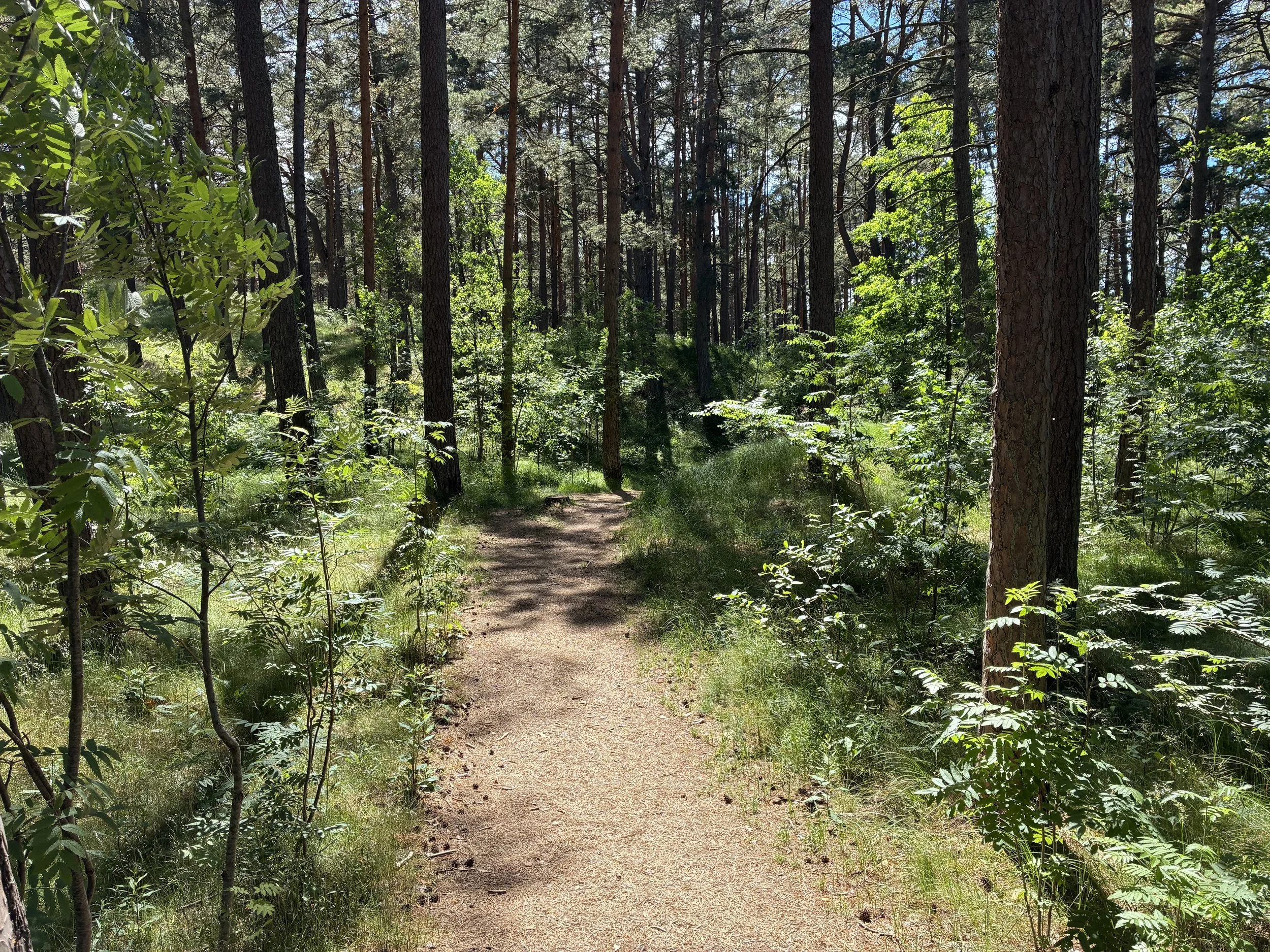
From Lilaste station, the route heads into pine forest almost immediately. The trail is soft underfoot, sandy in places, and shaded most of the way, running through the kind of tall, straight pine woodland that lines much of this stretch of coast. A large information board at the Lilaste trailhead maps out the wider Ādaži municipality trail network if you want to extend the walk inland.
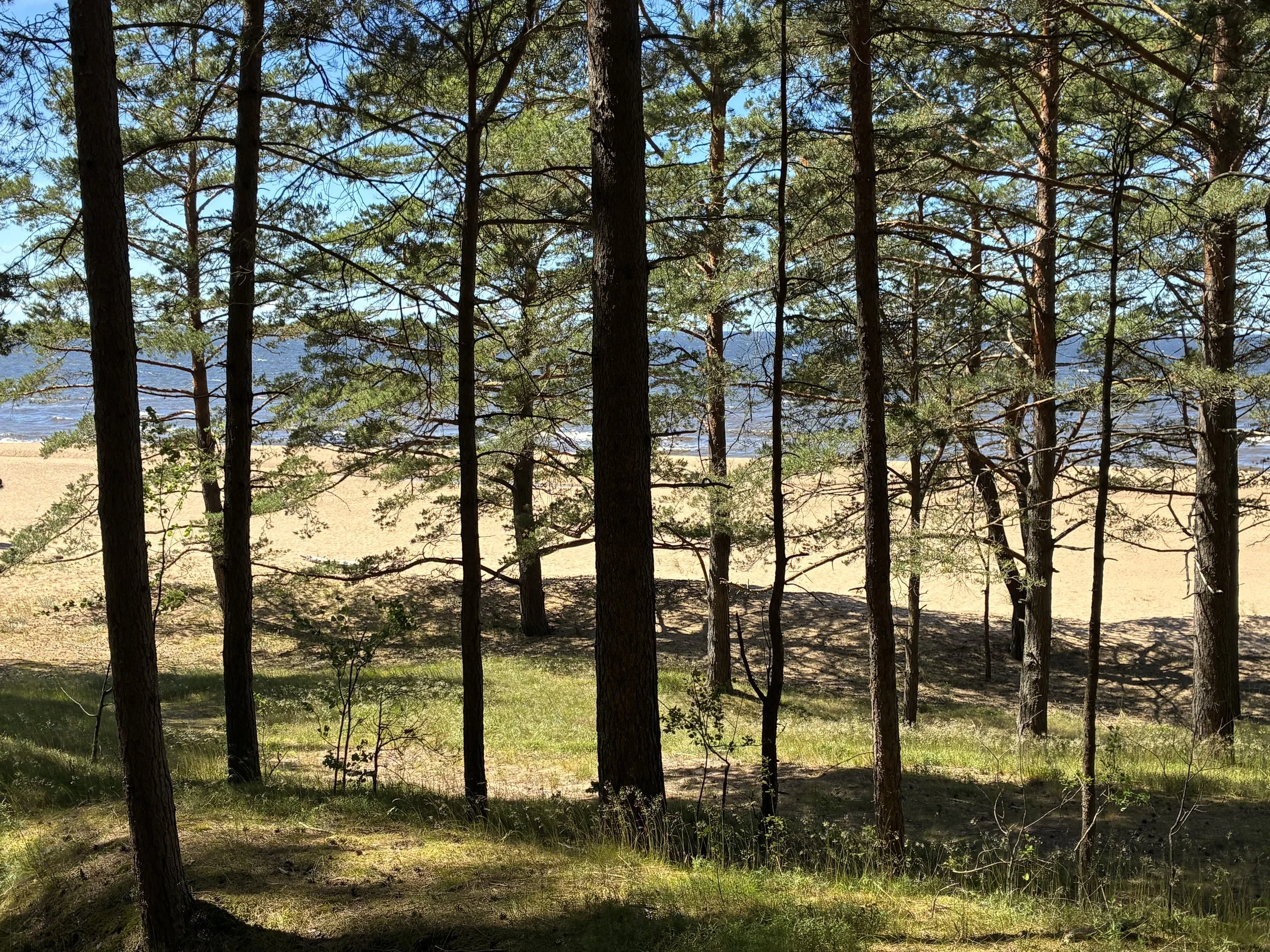
The path eventually opens onto coastal dunes, thick with beach grass and young pine and willow, before dropping onto the beach itself. From here it's a straightforward walk along the sand and through the dune-backed pine forest, with the Gulf of Riga on one side the whole way. The forest floor changes character a few times, from open sandy paths to denser blueberry undergrowth, and the walking stays easy and flat throughout.
Near Pabaži, look out for the Katrīnas Liepas (Catherine's Linden Trees), a small marked site with information boards on the legend of Catherine the Great bathing at this stretch of coast in 1764. It's a good spot to stop before heading to the station.
Total distance is around 6 to 7 km, and most people cover it in two to three hours at an easy pace, longer with stops at the beach.
Stay connected between beach towns with an Airalo eSIM, coverage across all three Baltic states from around €5. Airalo eSIM
What Makes Baltic Beaches Unique
Unlike Mediterranean destinations, Baltic beaches are defined by space, silence, and nature. You won’t find endless rows of sunbeds or dense resort development. Instead, expect wide stretches of soft sand, dunes shaped by wind, and forests that reach almost to the shoreline.
The water is generally calmer and less salty than open oceans, particularly along the Gulf of Riga. This makes many beaches more accessible for families, especially in places like Jūrmala and Pärnu where shallow waters extend far out.
Another defining feature is the cultural layer, wooden villas in Latvia, fishing traditions in Estonia, and protected landscapes like the Curonian Spit in Lithuania. These are not just beaches, but environments shaped by history and local identity.
Lilaste & Pibazi
The trail between Lilaste and Pabaži runs almost entirely through pine forest, with soft sandy paths, patches of blueberry undergrowth, and tall, straight trees that block most of the wind coming off the Baltic.
It's flat, easy walking, and shaded for most of the route, which makes it a good option even on a hot summer day.
The forest opens onto coastal dunes before reaching the beach, so the scenery shifts a few times without ever getting difficult underfoot.
Getting Back: Pabaži to Riga by train
Pabaži station is a short walk inland from the beach, sign-posted from the dunes. Trains back to Riga run about once an hour and take just under an hour, so it's worth checking the timetable on the Vivi app before you set off, since missing one means a longer wait.
Extending the trip
Saulkrasti is one stop past Pabaži and makes a good base if you want to turn this into an overnight trip rather than a day walk from Riga. Search places to stay in Saulkrasti on Booking.com or check Hotels.com for the same dates, since its longer cookie window is useful if you're still comparing options.
If you're travelling from outside Latvia and don't have cover in place yet, it's worth sorting travel insurance before a day like this one, given the walk covers uneven forest terrain and a stretch of open coast with no facilities.
Frequently Asked Questions About the Lilaste to Pabaži walk
How long does the Lilaste to Pabaži walk take?
Around two to three hours at an easy pace, covering roughly 6 to 7 km. Add extra time if you plan to stop at the beach or the Katrīnas Liepas site.
Is the trail suitable for families or beginners?
Yes. The path is flat and sandy throughout, with no steep sections. Good walking shoes are recommended since parts of the trail are loose sand.
Do I need to book train tickets in advance?
No, but it's easier to buy through the Vivi app before you travel. Tickets are also available from the conductor on board for a small surcharge.
Are there shops or toilets along the route?
No. Both Lilaste and Pabaži are unstaffed stations with no facilities, and there's nothing on the trail itself. Bring water and snacks with you.
Can I do this walk in the other direction?
Yes, starting at Pabaži and finishing at Lilaste works just as well. Train frequency is the same in both directions.
What's the best time of year to do this walk?
Late spring through early autumn gives the driest trail conditions and the best chance of a swim at the beach. It's walkable year-round, but the forest paths can get muddy in wet weather.
Explore more in the Baltics
Plan Your Trip: | Day Trips | Baltic Itineraries | Where to Stay in Riga
Explore Destinations: | Riga | Tallinn | Vilnius | Riga 2 Day Trip | Getting Around the Baltics
Practical Information: | Getting Around | eSIMs for Europe | Travel Tips | Where to Stay
Affiliate Disclosure
This page contains affiliate links. If you book or buy something through these links, we may earn a small commission at no extra cost to you.