
Discover the Best Baltic Beaches for Your Next Escape
Discover the Best Baltic Beaches
The Baltic coast stretches across three countries and offers something increasingly rare in European summer travel: wide, uncrowded beaches backed by dunes and pine forest, where the pace is slow and the scenery is quietly spectacular. From the resort town of Jūrmala, just 30 minutes from Riga, to Pärnu on Estonia's western coast and the UNESCO listed Curonian Spit in Lithuania, Baltic beaches reward travellers who look beyond the obvious. This guide covers the best beaches in Latvia, Estonia, and Lithuania - what each offers, how to get there, and what to expect when you arrive.
When to Visit Baltic Beaches
The Baltic beach season is relatively short but highly rewarding. The best time to visit is between June and August, when temperatures range from 20–28°C and daylight stretches late into the evening. July is typically the warmest month, with sea temperatures at their most comfortable, although still cooler than southern Europe.
Late spring (May) and early autumn (September) offer a different kind of experience. While swimming may be less appealing, these months are ideal for long coastal walks, photography, and enjoying the quiet atmosphere without summer crowds. The light along the Baltic Sea during these shoulder seasons is particularly striking, and prices for accommodation are often lower.
Stay connected between beach towns with an Airalo eSIM, coverage across all three Baltic states from around $5. Airalo eSIM
What Makes Baltic Beaches Unique
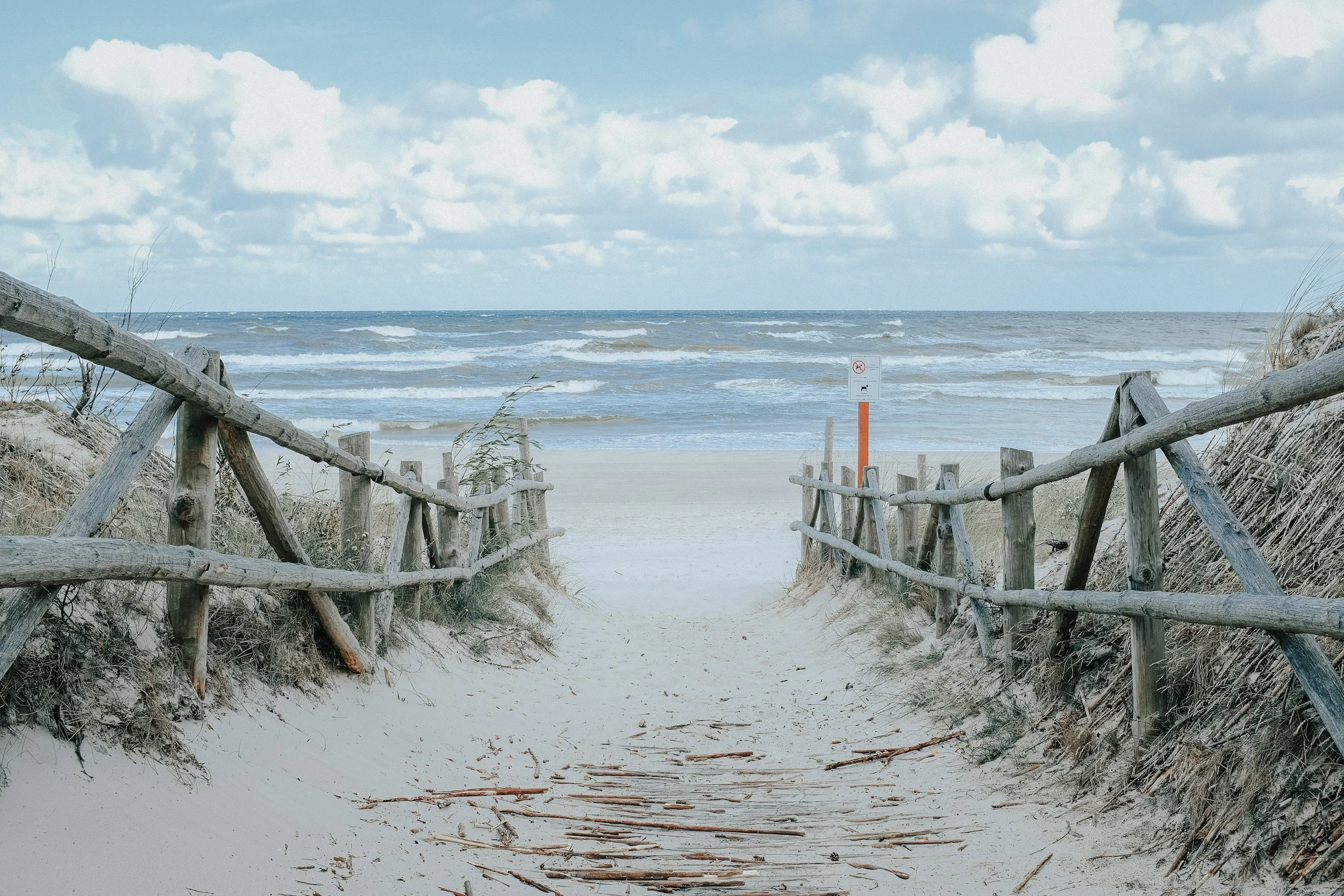
Unlike Mediterranean destinations, Baltic beaches are defined by space, silence, and nature. You won’t find endless rows of sunbeds or dense resort development. Instead, expect wide stretches of soft sand, dunes shaped by wind, and forests that reach almost to the shoreline.
The water is generally calmer and less salty than open oceans, particularly along the Gulf of Riga. This makes many beaches more accessible for families, especially in places like Jūrmala and Pärnu where shallow waters extend far out.
Another defining feature is the cultural layer, wooden villas in Latvia, fishing traditions in Estonia, and protected landscapes like the Curonian Spit in Lithuania. These are not just beaches, but environments shaped by history and local identity.

Jūrmala Beach (Majori)
Just 30 minutes by train from Riga, Jūrmala is Latvia’s best-known seaside escape. The wide sandy stretch at Majori is the heart of the resort, lined with beach cafés, historic villas, and the lively Jomas Street promenade. Trains depart Riga Central Station every 20–30 minutes and drop you right in Majori, only a short walk from the shoreline. With its mix of golden sand, shallow water, and easy access, Jūrmala Beach (Majori) is perfect for a relaxing day trip from the capital.
Best for: day-trippers from Riga, families, spa breaks, and first-time visitors to the Latvian coast.
Getting there: Train from Riga Central Station - 30 minutes, departures every 20–30 minutes. Search timetables on Omio.
More Beaches Near Riga
Beyond Jūrmala, the coastline north of Riga offers a quieter and more local experience, well worth exploring if you have extra time or are looking to escape the summer crowds.
Vecāķi Beach is easily reached by public bus from central Riga (Route 21, around 40 minutes). Wide sandy stretches backed by pine forest make it a popular local escape, noticeably quieter than Jūrmala despite being just as accessible.
Saulkrasti is around 50km north of Riga and reachable by train in under an hour. It's a relaxed coastal town with cycle paths, a white dune viewpoint, and a low-key beach atmosphere that appeals to those looking for something more peaceful. Picnic spots and easy walking routes make it a solid half-day option.
Pärnu Beach, Estonia
Pärnu is Estonia's self-declared 'summer capital,' and its beach more than lives up to the reputation. A long, gently curving stretch of white sand faces the Gulf of Pärnu, with calm, shallow water that warms considerably by July - making it one of the most swimmable beaches in the entire Baltic region. The promenade is lined with cafés, ice cream stands, and spa hotels, while the town itself has a relaxed, slightly retro resort character that's genuinely charming rather than overdeveloped.
Best for: families, spa seekers, and those who want a proper beach resort experience without Mediterranean prices or crowds.
Getting there: Around 2 hours by bus from Tallinn. Lux Express and FlixBus both operate the route with departures throughout the day. Day trips are straightforward, but staying overnight lets you enjoy the town's restaurants and old town in the evening.
Search hotels and apartments in Pärnu
Palanga Beach, Lithuania
Palanga is Lithuania's busiest and most popular seaside resort, drawing visitors from across the country and beyond every summer. The beach itself is impressive — several kilometres of fine white sand, wide enough to absorb the crowds without ever feeling hemmed in. The town behind it has a lively summer atmosphere: a pedestrianised main street, restaurants open late, and the famous Palanga Pier stretching out into the sea.
Best for: those who want a social beach scene, evening dining, and easy access from Vilnius or Klaipėda.
Getting there: Around 3 hours by bus from Vilnius. The town also has a small regional airport with seasonal connections. From Klaipėda, it's just 25 minutes by car or regular bus — easy to combine with a visit to the Curonian Spit.
Browse accommodation in Palanga
The Curonian Spit, Lithuania
Shared between Lithuania and the Russian exclave of Kaliningrad, the Lithuanian side of the Curonian Spit is a UNESCO World Heritage Site and one of the most dramatic landscapes in Northern Europe. A narrow strip of land barely a few kilometres wide, it separates the Curonian Lagoon from the Baltic Sea, with towering sand dunes on one side and pine-forested cycling paths on the other.
The beach on the sea-facing side is wild, exposed, and spectacular. The dunes, including the famous Parnidis Dune near Nida can be explored on foot. The small fishing villages of Juodkrantė, Pervalka, and Nida have their own distinct character: amber galleries, smoked fish stalls, and timber houses painted in traditional colours.
Best for: nature lovers, photographers, cyclists, and those after an experience unlike anything else in the Baltics.
Getting there: Take a ferry from Klaipėda (a 10-minute crossing) to reach the spit. Buses and cycling routes connect the villages. Nida, at the southern end, is around 50km from the ferry terminal. A National Park entry fee applies for vehicles.
Cape Kolka, Latvia
Cape Kolka sits at the northwestern tip of Latvia where the Gulf of Riga meets the open Baltic Sea — one of the most remote and striking coastal spots in the country. Wild, windswept, and entirely uncommercialised, the shoreline is dramatic rather than conventionally beautiful: grey-green water, weathered driftwood, and a genuine sense of standing at the edge of something. Swimming is not the draw here; solitude and scenery are.
The surrounding Slītere National Park adds an ecological dimension, with ancient coastal forest and rich birdlife throughout the year. Getting to Cape Kolka requires a car, which makes it best suited to road-trippers exploring northwestern Latvia.
Best for: hikers, photographers, and travellers looking for a completely off-the-beaten-path coastal experience.
Choosing the Right Baltic Beach for Your Trip
Each country offers a slightly different coastal experience, so your choice depends on the type of trip you want.
For resort atmosphere and amenities: Jūrmala (Latvia), Palanga (Lithuania), and Pärnu (Estonia) offer restaurants, cafés, spas, and easy access from major cities.
For nature and quiet escapes: Head to the Curonian Spit (Lithuania), Cape Kolka (Latvia), or the islands of Saaremaa and Hiiumaa (Estonia).
For families with young children: Jūrmala and Pärnu have the calmest, shallowest water and the best beach facilities.
For something off the beaten path: Pape in Latvia or Šventoji in Lithuania provide a slower, less commercial seaside experience.
Distances are relatively short across the Baltics, so it’s entirely possible to combine multiple coastal stops in one trip, especially if you’re traveling by car.
Practical Tips for Visiting Baltic Beaches
Weather can change quickly — even in summer, bring a light jacket or layers.
Facilities vary — major resorts have full amenities, but remote beaches may have little or none.
Respect protected areas — many coastal zones are protected; stick to marked paths and avoid disturbing dunes or wildlife.
Sunset timing — in midsummer, sunsets can be as late as 10–11 PM, making evenings a highlight of any coastal stay.
Stay connected — mobile coverage can be patchy in remote coastal areas. An eSIM with a data plan ensures you can navigate and look up timetables without relying on local Wi-Fi.
Why Baltic Beaches Are Worth Discovering
The Baltic coast offers something increasingly rare in Europe: space to breathe. Whether you’re walking along an empty shoreline in Latvia, climbing dunes in Lithuania, or exploring island coastlines in Estonia, the experience is less about spectacle and more about atmosphere.
For travellers looking to combine culture, nature, and a slower pace of travel, Baltic beaches provide a compelling alternative to more crowded European seaside destinations, without sacrificing beauty or variety.
Frequently Asked Questions About Baltic Beaches
Are Baltic beaches warm enough to swim?
Yes, but the water is cooler than Mediterranean destinations. Sea temperatures in the Gulf of Riga typically reach 18–22°C in July and August, which most swimmers find comfortable. The open Baltic Sea is slightly cooler. Pärnu and Jūrmala are generally regarded as the warmest options due to their sheltered positions in the gulf.
What is the best beach in the Baltics?
It depends on what you're looking for. For a classic resort experience, Jūrmala (Latvia) and Pärnu (Estonia) are the top choices. For nature and dramatic scenery, the Curonian Spit in Lithuania is unmatched. For a quiet escape near Riga, Vecāķi or Saulkrasti are underrated options.
When is the best time to visit Baltic beaches?
July is the peak month for beach weather, with the warmest sea temperatures and longest daylight hours. June and August are also excellent — less busy than July but still reliably warm. May and September are better suited to coastal walks than swimming.
Is Jūrmala worth a day trip from Riga?
Absolutely. The train journey takes around 30 minutes from Riga Central Station, and trains run every 20–30 minutes. A full day in Jūrmala is easy to fill: beach time in the morning, lunch on Jomas Street, and a walk through the wooden villa district in the afternoon. Search train timetables
How do I get to the Curonian Spit?
Take a short ferry from Klaipėda (around 10 minutes) to reach the spit. From there, buses connect to the main villages including Nida. You can also drive onto the ferry. A National Park entry fee applies for vehicles entering by car.
Are Baltic beaches suitable for families?
Yes, particularly Jūrmala, Pärnu, and Palanga, all of which have calm, shallow water, beach cafés, and easy access to town facilities. The Curonian Spit and Cape Kolka are better suited to older children and adults who enjoy nature and walking.
Do I need a car to visit Baltic beaches?
Not necessarily. Jūrmala is very well served by train from Riga, and Pärnu and Palanga are both reachable by long-distance bus. However, for more remote spots like Cape Kolka, Šventoji, or the northern Curonian Spit villages, a car makes the experience significantly easier. Explore car hire options
Explore more in the Baltics
Plan Your Trip: | Day Trips | Baltic Itineraries | Where to Stay in Riga
Explore Destinations: | Riga | Tallinn | Vilnius | Riga 2 Day Trip | Getting Around the Baltics
Practical Information: | Getting Around | eSIMs for Europe | Travel Tips | Where to Stay
Affiliate Disclosure
This page contains affiliate links. If you book or buy something through these links, we may earn a small commission at no extra cost to you.